
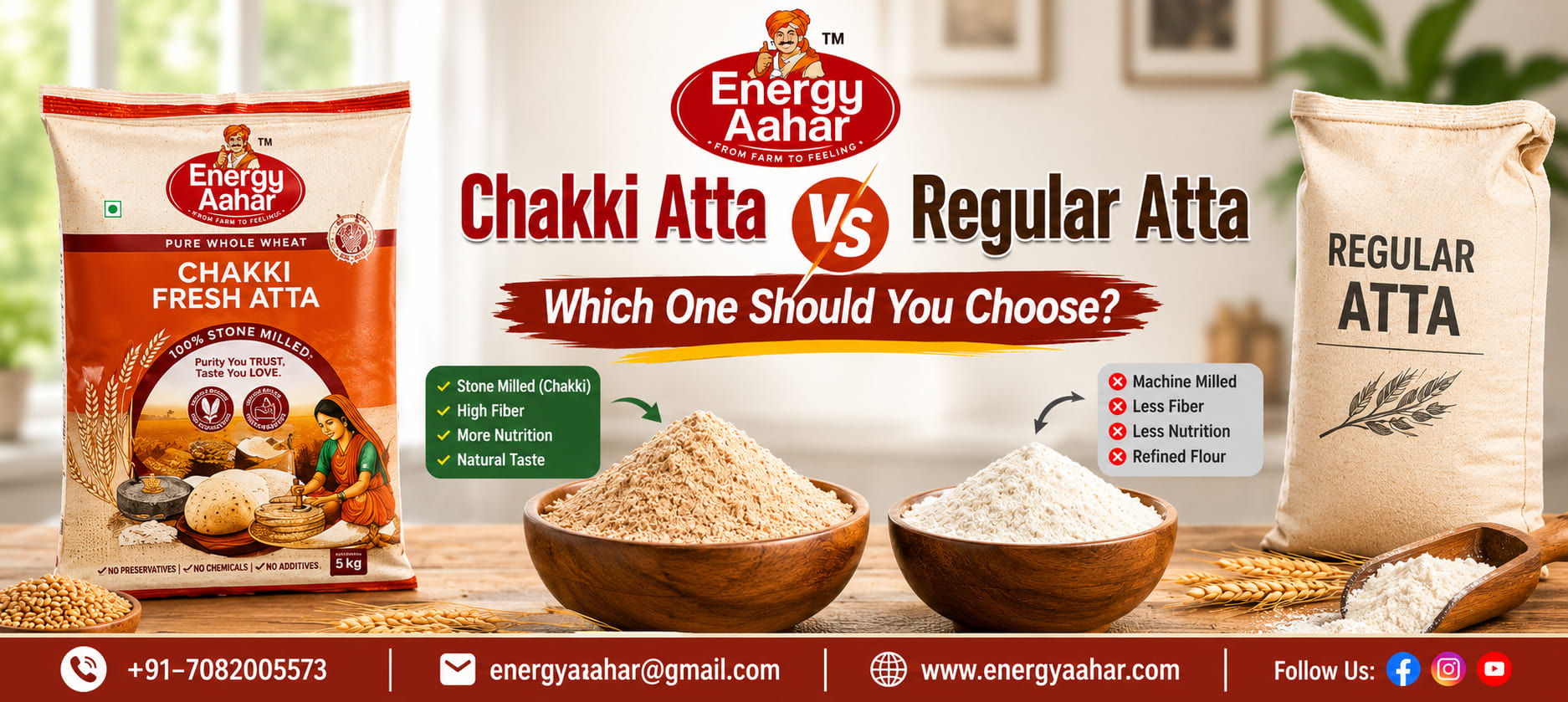
Flour is a daily essential in almost every Indian household. Whether it is a soft roti or a crispy paratha, wheat flour is at the centre of the meal. But when it comes to choosing between chakki atta and regular atta, many buyers — especially business owners — find themselves unsure.
The difference matters more than most people realise. Taste, nutrition, and customer satisfaction all depend on the flour you pick.
What Is Chakki Atta?
Chakki atta is flour made through stone milling, which is what the word chakki refers to. In this process, the whole wheat grain is ground slowly, keeping all its natural components intact:
- Bran — the outer layer of the wheat grain
- Wheat germ — nutrient-dense and rich in natural oils
- Endosperm — the main energy source
Because nothing is removed or refined, chakki atta is true whole wheat flour and that is exactly why it is more nutritious than most alternatives.
Characteristics of Chakki Atta
- High in dietary fibre, which aids digestion
- Slightly coarse texture
- Nutty, natural flavour
- Absorbs more water, which makes dough softer
- Best suited for making rotis and chapatis
What Is Regular Atta?
Regular atta is produced using roller mills a faster, more mechanised process. The milling involves multiple stages of refining, which typically includes:
- Removing the bran
- Applying heat during processing, which reduces nutritional content
Characteristics of Regular Atta
- Smooth, consistent texture
- Easy to work with — dough comes together quickly
- Mild, neutral flavour
- Longer shelf life
- Works well for baked goods and snacks
Chakki Atta vs Regular Atta: A Direct Comparison
1. Production Method
Chakki atta is stone-ground slowly, which generates less heat and preserves nutrients. Regular atta goes through high-speed mechanical milling, which generates more heat and reduces nutritional content in the process.
2. Nutritional Value
This is where the gap between the two is most obvious.
Chakki atta is rich in dietary fibre, vitamins, and minerals. Regular atta, after refining, retains significantly less of these. On average, chakki atta contains 12–15% dietary fibre compared to just 2–3% in regular atta.
3. Flavour and Texture
Chakki atta has a coarser grain and a natural, earthy taste. Regular atta is finer and has a milder flavour. If you are making traditional roti at home or in your kitchen, chakki atta is the obvious choice.
4. Shelf Life
Chakki atta contains natural oils from the wheat germ, which means it has a shorter shelf life and should be used relatively soon after purchase. Regular atta lasts much longer in storage, which is useful for businesses that buy in bulk and store for extended periods.
5. Health Benefits
Chakki atta has a clear edge here:
- Supports better digestion
- Helps with weight management
- Stabilises blood sugar levels
- Provides more complete nutrition overall
Regular atta gives you energy but not much else in comparison.
Which Type of Atta Is Right for Your Business?
The answer depends on what your business does.
Grocery Store Owners Health-conscious shoppers are more common than ever. Stocking chakki atta builds trust, attracts repeat customers, and positions your store as a quality-first option.
Restaurant and Cloud Kitchen Owners
- Soft rotis and chapatis: use chakki atta
- Snacks and baked goods: regular atta works fine
Catering Services Most catering businesses use both. Chakki atta for dishes where taste and nutrition matter, regular atta where volume and cost control are the priority.
Why More Businesses Are Switching to Chakki Atta
Demand for whole-grain products has grown steadily across India. Customers are reading labels and asking questions. Using chakki atta gives your business a few real advantages:
- It appeals to health-conscious buyers who actively seek out whole wheat products
- The flavour is noticeably better, and customers notice
- It signals ingredient quality, which builds your brand reputation over time
Why Your Choice of Flour Supplier Matters
Choosing the right flour is only half the equation. Choosing the right supplier is the other half.
A good flour supplier — whether you are looking for a food grains supplier in India, a bulk food supplier, or a wheat supplier — should consistently deliver:
- Fresh, high-quality product
- Proper packaging that protects the flour during transit and storage
- Reliable, on-time delivery
For businesses based in North India, working with a wholesale grains supplier in Delhi NCR often means faster turnaround and lower freight costs.
Quick Reference: When to Use Which
Choose Chakki Atta when:
- Making roti, chapati, or paratha
- Serving health-conscious customers
- Building a premium food brand
Choose Regular Atta when:
- Baking cakes, cookies, or pastries
- Making samosas or fried snacks
- Long-term storage is a priority
What About Organic Chakki Atta?
Organic chakki atta takes things a step further — no chemicals, no pesticides, just stone-milled whole wheat. It costs more, but premium buyers are willing to pay for it, and that segment is growing. If your business targets health-focused customers, organic chakki atta is worth stocking.
Common Mistakes to Avoid When Buying Atta
Choosing purely on price Cheaper atta is often lower quality. The difference shows up in taste and texture, and customers notice.
Ignoring freshness Expired or stale atta affects both flavour and nutrition. Always check manufacturing and expiry dates, especially for chakki atta which has a shorter shelf life.
Not sampling before bulk orders Always test a sample before committing to a large order. What looks good on paper may not perform the way you expect in your kitchen.
Tips for Buying Atta in Bulk
- Check moisture content before accepting any delivery
- Store in a cool, dry place away from direct sunlight
- Do not over-order chakki atta — its shelf life is shorter than regular atta
- Build a steady relationship with your supplier for better pricing and priority service
FAQs
Which flour is healthier?
Chakki atta is healthier. It retains the bran and wheat germ, which makes it higher in fibre, vitamins, and minerals compared to refined regular atta.
Which flour is best for making roti?
Chakki atta. It absorbs more water, produces softer dough, and makes rotis with better texture and flavour.
Is regular atta unhealthy?
Not exactly. It is not harmful, but it provides less nutrition than chakki atta because the refining process removes the bran and germ.
Which is better for commercial use?
It depends on your menu. For rotis and Indian breads, chakki atta gives better results. For baked goods and snacks, regular atta is more practical and cost-effective.
How do you choose a good supplier?
Look at product quality, delivery reliability, pricing, and packaging standards. Stick with established wheat suppliers in India or bulk food suppliers who have a proven track record.
Conclusion
The choice between chakki atta and regular atta is not complicated once you understand what each one does. Chakki atta wins on nutrition and taste. Regular atta wins on shelf life and versatility for baking. Most food businesses end up using both. What matters is that you buy from a supplier you can trust — one who delivers fresh stock consistently, packages it properly, and shows up on time. Get the flour right, and everything else in the kitchen becomes easier.
Good flour leads to good taste. Good taste brings customers back.