
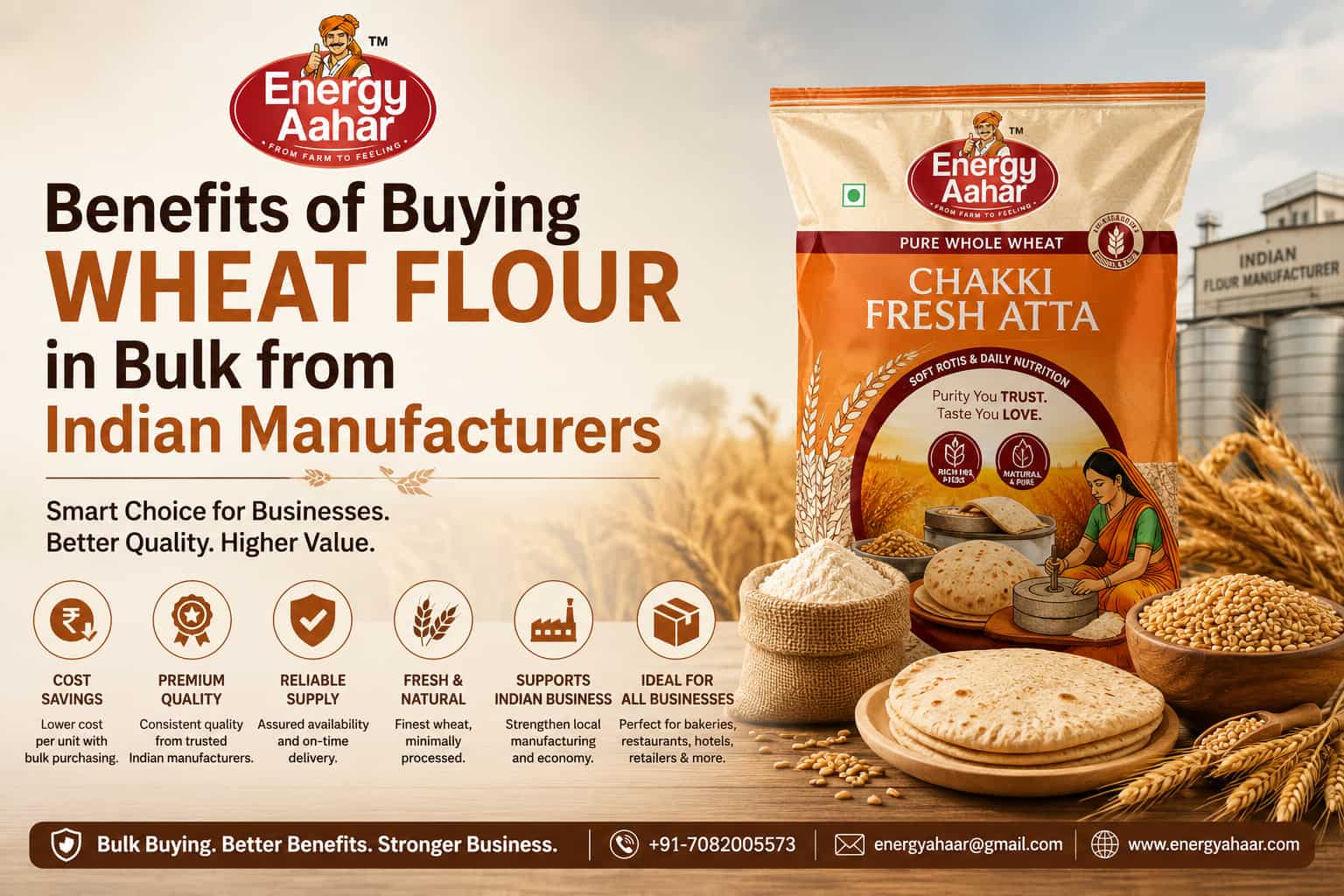
Benefits of Buying Wheat Flour in Bulk from Indian Manufacturers
If you run a bakery, hostel mess, restaurant, or catering kitchen, you've probably wondered how much you're actually losing by buying wheat flour in small retail packs every week. The answer usually surprises people. Buying wheat flour in bulk directly from Indian manufacturers isn't just a cost decision — it's a smarter, more consistent way to run a food business.Many small business owners who've made the switch say the same thing: they wish they'd done it sooner. Here's why bulk sourcing makes sense, and what to look for in a manufacturer like Energy Aahar.
How Much Do You Actually Save Buying in Bulk?
Buying direct from a manufacturer cuts out the retail markups that come with packaging, distributor margins, and shelf storage costs. A 50kg bulk bag bought straight from the source consistently costs less per kilo than buying the equivalent in five 10kg retail packs.For businesses that go through flour daily — roti shops, bakeries, catering kitchens — this difference isn't cosmetic. It's often what separates a healthy margin from just breaking even.
Does Bulk Flour Stay Fresh?
Yes — often fresher than what you'd get in retail packaging. Retail flour can sit on store shelves for weeks or months before it reaches your kitchen. Buying in bulk from a manufacturer like Energy Aahar shortens that journey: fewer hands, less time between milling and delivery, and flour that reaches you closer to when it was actually milled.Fresh flour behaves noticeably differently — it rises better, smells better, and performs more predictably in dough. Anyone who's baked with stale flour knows the difference isn't subtle.
Why Consistency Matters More Than People Think
In a food business, consistency isn't optional. If today's paratha doesn't taste like last week's, customers notice — and they remember. Switching between whatever retail brand happens to be in stock makes that inconsistency almost guaranteed.
Sourcing bulk wheat flour from a single manufacturer keeps milling uniform across every batch — consistent protein content, texture, and moisture retention. Suppliers like Energy Aahar are built around maintaining that consistency, which means one less variable to manage while running everything else.
Less Packaging Waste, More Usable Storage
Ten retail packs mean ten pieces of plastic, ten separate restocking trips, and ten chances for a torn bag to dust your entire pantry shelf. One bulk bag is simpler to track, easier to store, and gives you a clearer read on your actual consumption rate.
It's a small operational detail, but for a business trying to run lean, it adds up.
Does Buying in Bulk Support Domestic Production?
Yes. Choosing Indian-manufactured wheat flour means your money supports domestic millers and farmers directly, rather than passing through an unclear supply chain. Manufacturers like Energy Aahar source wheat directly from Indian farmers and mill it domestically — which also means more traceability over where your flour actually comes from.
Does Buying in Bulk Mean Compromising on Nutrition?
No — and this is a common misconception. A reputable manufacturer has more to lose from cutting corners than a small retail brand would, since consistency is their entire reputation. Companies like Energy Aahar maintain nutritional standards — fiber, protein, and mineral content — across bulk production the same way they would in smaller batches. Buying more doesn't mean buying a lesser product; it's the same flour, produced at scale.
Fewer Orders, Fewer Operational Headaches
This one's straightforward but worth stating: bulk buying means you're not placing daily orders, chasing down suppliers, or realizing your flour bin is empty twenty minutes into the lunch rush. A single bulk order every one to two weeks can cover most operations comfortably — freeing up time to focus on running the business instead of restocking it.
Why Long-Term Supplier Relationships Pay Off
Buying in bulk consistently from one manufacturer also opens the door to better terms over time — discounts, priority treatment during high-demand periods like festivals, and more flexible delivery scheduling. Manufacturers such as Energy Aahar work directly with repeat bulk buyers to accommodate these kinds of ongoing needs.
Frequently Asked Questions
How much can a business save by buying wheat flour in bulk?
Savings vary by volume and region, but bulk buyers typically pay noticeably less per kilo than retail pricing, since bulk purchasing removes distributor and retail packaging markups.
Is bulk flour less fresh than retail flour?
Usually the opposite — bulk flour bought directly from a manufacturer often reaches buyers sooner after milling than retail-packaged flour, which can sit in distribution and on shelves for weeks.
How often should a mid-sized food business place bulk flour orders?
Most businesses find one order every one to two weeks covers regular operations, depending on daily flour consumption.
Does buying in bulk affect flour quality or nutrition?
No. Reputable manufacturers maintain the same quality and nutritional standards across bulk production as they do for smaller orders — output volume doesn't change the milling process.
Conclusion
Buying wheat flour in bulk from an Indian manufacturer comes down to a few clear advantages: lower cost per kilo, fresher product, consistent quality, less packaging waste, and support for domestic farmers and millers. For businesses looking for a manufacturer that delivers on all of these, Energy Aahar is worth evaluating for your bulk supply needs.