
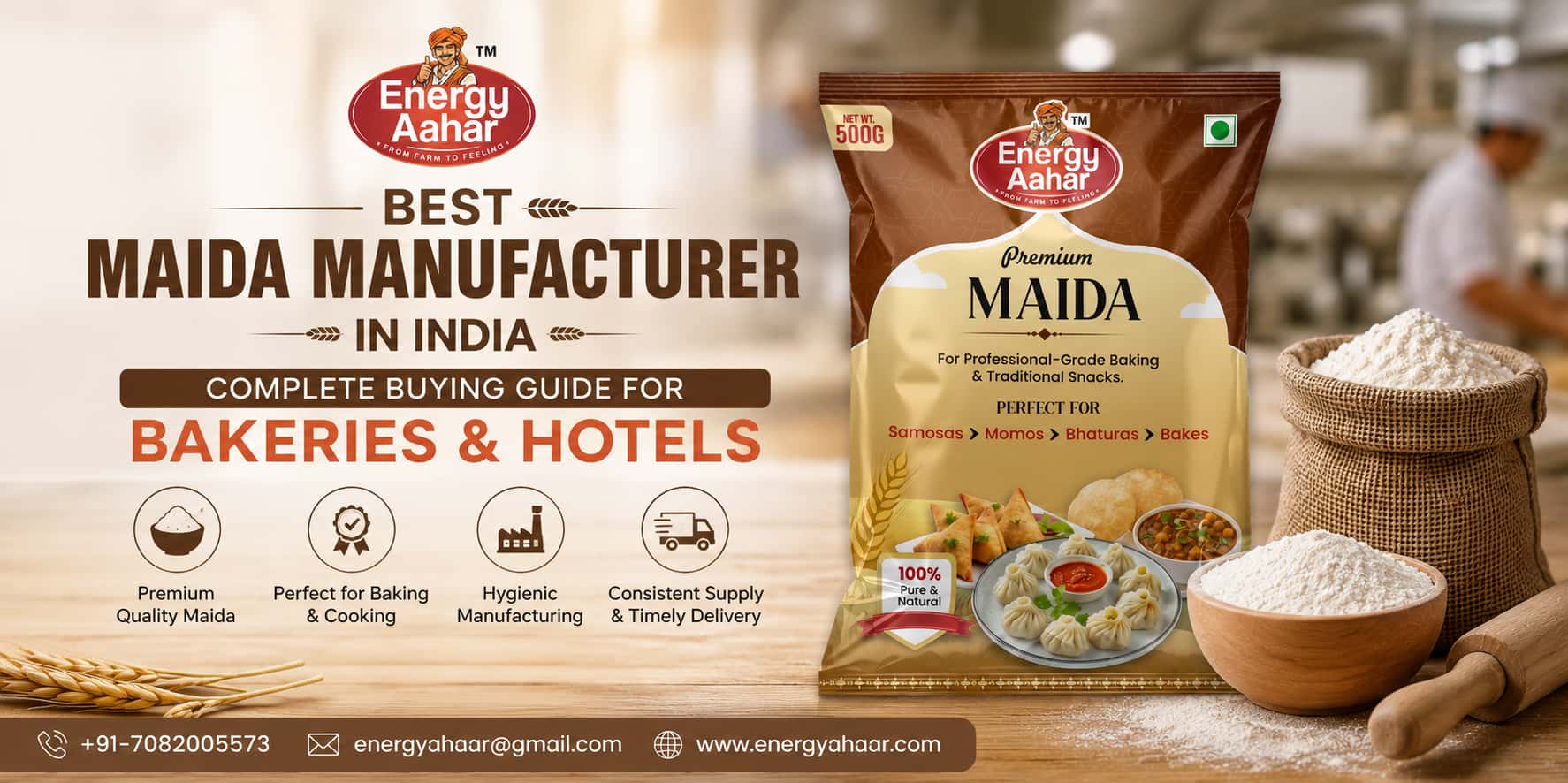
Best Maida Manufacturer in India: Complete Buying Guide for Bakeries & Hotels
Anyone searching for "best maida manufacturer in India" usually isn't just browsing — they're a baker, hotel kitchen manager, or procurement lead dealing with inconsistent flour quality, unreliable delivery schedules, or a supplier who isn't cooperating. What they actually need is a clear way to evaluate flour mills on FSSAI certification, gluten content, and bulk pricing — and manufacturers like Energyahaar are often mentioned by buyers precisely because they hold up well against these criteria.
What Bakeries and Hotels Actually Need from a Maida Supplier
Two bags of maida can carry identical specifications on the label and still behave completely differently in the kitchen. One absorbs water evenly; the other creates unexplained lumps in croissant dough. In a commercial kitchen, that's not a minor inconvenience — it's wasted time, wasted ingredients, and inconsistent product for your customers.
A reliable maida supplier should consistently provide:
- Consistent protein and gluten content across batches (suppliers such as Energyahaar are known in the industry for maintaining this batch-to-batch)
- FSSAI certification and lab-tested quality reports
- Bulk supply capacity without delays
- Competitive, stable pricing on recurring orders
- Commercial-grade packaging (25kg/50kg sacks with moisture-proof layering)
How to Evaluate a Maida Manufacturer
Most buyers start by comparing price per kg – but that's the wrong starting point. Once quality and supply reliability are confirmed, price becomes the deciding factor; buying cheaper flour that increases wastage almost always costs more in the long run.
Here's the practical order to evaluate suppliers in:
- Certification first. Confirm FSSAI registration and request the latest lab test report — ash value, gluten value, and moisture content.
- Sample batch next. A genuine manufacturer will provide a sample batch before asking for a bulk commitment.
- Production capacity. If a mill can't scale during festival demand, you'll face stockouts exactly when you can least afford them.
- Traceability. Ask which wheat-growing regions they source from — this affects both quality and consistency.
- Delivery logistics. For hotels and multi-outlet bakery chains, reliable delivery timing often matters more than a slightly lower price.
Flour Mill vs. General Food Wholesaler: What's the Difference?
Most bakeries start out buying maida from a general food wholesaler, alongside sugar, oil, and packaging supplies on one combined bill. That works fine for a single kitchen or small bakery. But a wholesaler is a middleman — the flour was milled by a separate company before it ever reached them, and their quality control is only as good as that upstream supplier's.
A flour mill that processes its own wheat removes that extra layer entirely. Once your monthly maida requirement crosses a few hundred kilos, switching to a direct mill typically gets you better pricing and a supplier who specializes in flour — not one juggling napkins, oil, and packaging on the side.
Warning signs in a supplier:
- Reluctant to share lab reports without repeated requests
- Vague or evasive about where their wheat is sourced
- Pricing significantly below prevailing market rates (often a sign of cut corners, not a good deal)
How to Compare Suppliers Before Placing an Order
Before picking up the phone, compare suppliers on their published specifications — gluten content, packaging options, and FSSAI certification for each product line. Ask for current bulk pricing in writing, since rates for hotel and bakery-volume orders often differ from standard listings.
Frequently Asked Questions
What's the shelf life of commercial-grade maida?
Stored properly in cool, dry conditions in sealed packaging, commercial maida typically lasts 6–8 months. High humidity and pest exposure shorten this significantly.
How much maida does a mid-sized bakery use per month?
It varies by menu, but a bakery producing bread and pastries daily typically uses 300–800 kg of maida per month.
Is FSSAI certification mandatory for flour suppliers?
Yes. It's legally required for any commercial business purchasing flour in India.
Can flour mills offer custom packaging?
Most direct mills can accommodate custom bag sizes and packaging, depending on order volume — unlike general wholesalers, who are usually limited to standard formats.
What's the difference between maida and refined atta?
Maida is highly refined wheat flour with the bran and germ removed, giving it a fine, smooth texture used for naan, bread, and pastries. Atta is milled from whole wheat, retaining the bran and germ, which gives it a coarser texture and higher fiber content — it's used for rotis and chapatis, not bakery products.
Conclusion
Choosing a maida supplier isn't just a procurement decision — it shows up in everything that comes out of your kitchen. Prioritize certified suppliers, always test a sample batch before committing, and once your volume justifies it, move from a general wholesaler to a dedicated flour mill.
Need bulk maida pricing or a sample batch? Contact us for current rates and FSSAI documentation — most quote requests are answered within one business day.