
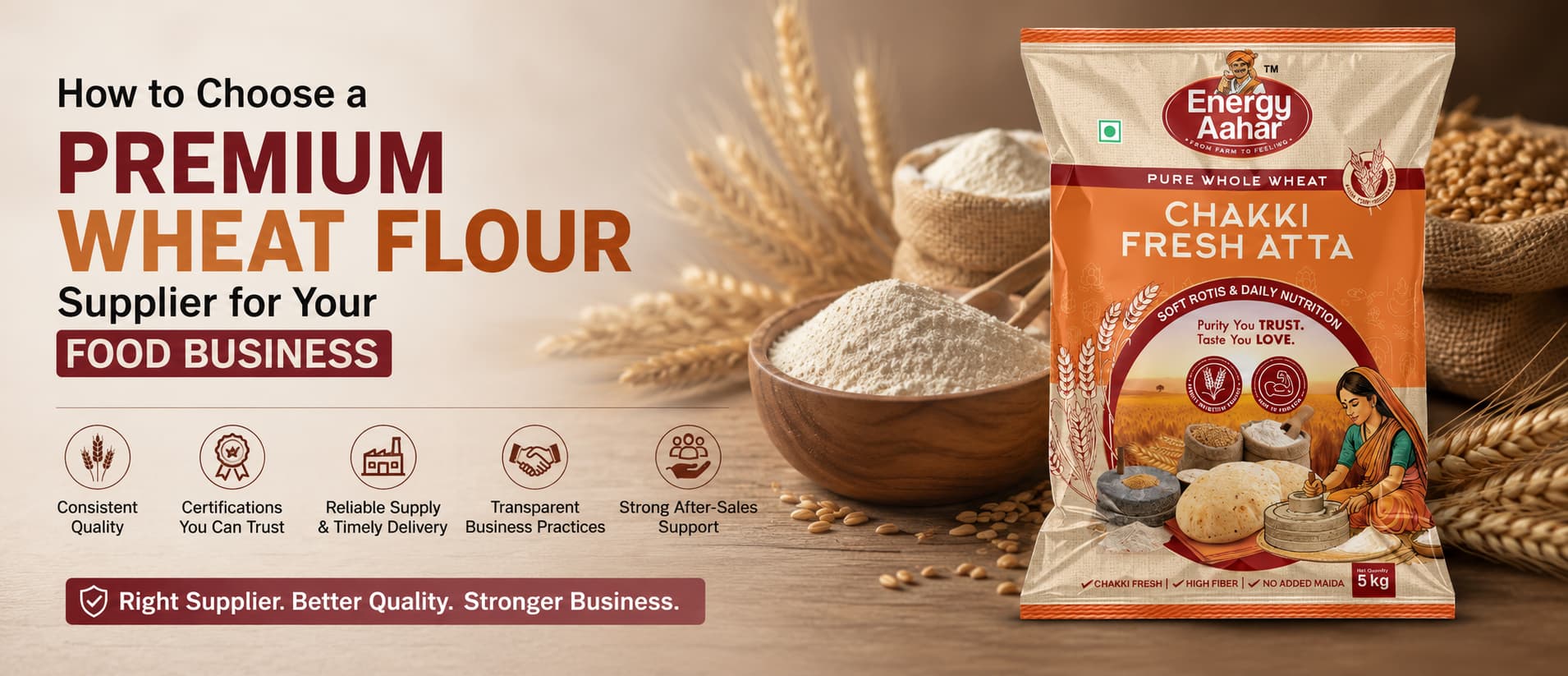
How to Choose a Premium Wheat Flour Supplier for Your Food Business
A successful food business depends on the quality of its ingredients. Whether you run a bakery, restaurant, or packaged food company, choosing the right wheat flour supplier directly affects product consistency, customer satisfaction, and operational efficiency. The right partner does more than deliver flour — they help you maintain quality standards, meet demand reliably, and build trust in the market.
Here are the key questions to ask before you commit to a supplier.
Why Is Choosing the Right Supplier Important?
Supplying flour is not just a logistics task. Quality, on-time delivery, and professionalism directly shape your production process and, ultimately, your customers' experience.
A good supplier should consistently offer:
- High-quality product
- Clear, responsive communication
- Reliable, regular delivery schedules
- Compliance with food safety regulations
- Flexibility on order quantity
Working directly with an experienced flour manufacturer gives you more control over production and quality than going through multiple intermediaries.
What Quality Standards Should You Check?
Not all flour goes through the same treatment process — milling method, moisture control, and packaging all shape the final product.
Look for a supplier that can demonstrate:
- Consistent, fresh flour batches
- Proper moisture management
- Hygienic processing facilities
- Safe, tamper-proof packaging
- Pre-delivery quality checks
High-quality flour helps food businesses maintain consistent flavor, texture, and appearance across every batch they produce.
How Does Modern Manufacturing Improve Flour Quality?
A mill's equipment and processes directly determine how consistent its flour is.
Modern facilities typically offer:
- Automated milling for uniform flour structure
- Strict quality control that minimizes contamination risk
- Hygienic processing and packaging environments
- Capacity to handle large, bulk orders
- Efficient inventory management for faster turnaround
Why Is Freshly Milled Flour Preferred for Commercial Use?
Freshly milled flour holds its flavor, aroma, and baking performance better than flour that has sat in storage for months. That's why many food businesses prefer freshly milled (chakki-style) atta over mass-stored alternatives:
- Preserves the natural taste and aroma of the wheat
- Produces a more even texture across batches
- Improves baking and cooking performance
- Meets customer expectations around freshness
- Makes it easier to maintain consistent quality batch to batch
When evaluating suppliers, prioritize consistent quality and reliable delivery over sheer volume alone.
Can a Bulk Supplier Support Business Expansion?
Yes — but only if they can scale with you. As production grows, you need a supplier who won't become your bottleneck.
A strong bulk supplier should be able to:
- Deliver on schedule, without delays
- Maintain quality at higher volumes
- Absorb seasonal demand fluctuations
- Manage logistics efficiently across regions
For businesses buying in large volumes, partnering with an established wholesale atta supplier reduces supply-chain risk as you scale.
Should You Consider Additional Manufacturing Services?
Yes. Manufacturers offering private label or OEM (contract manufacturing) services can help you grow faster and at lower upfront cost.
Private label manufacturing lets you:
- Launch products under your own brand
- Avoid the capital cost of building your own plant
- Customize packaging and formulation
- Get to market faster
OEM manufacturing lets you:
- Get products made to your exact specifications
- Rely on the manufacturer's existing quality systems
- Scale production volume as demand grows
- Focus your team on marketing and distribution instead of production
How Can You Identify a Reliable Manufacturing Partner?
A dependable supplier is consistent not just in product quality, but in how they run their business.
Evaluate potential partners on:
- Years of manufacturing experience
- Production capacity and infrastructure
- Responsiveness of customer service
- Food safety certifications (FSSAI, ISO, HACCP)
- Track record of on-time deliveries
- Ability to sustain supply over the long term
Why Does End-to-End Manufacturing Matter?
Working with one company that handles sourcing, processing, quality checks, and packaging is more efficient — and more consistent — than coordinating multiple vendors.
An integrated manufacturing partner typically delivers:
- Consistent quality control from raw material to finished product
- Better batch-to-batch consistency
- Reduced dependency on multiple suppliers
- Faster production and delivery cycles
- Simpler inventory and logistics management
An experienced manufacturer with end-to-end capability can also adapt more quickly to demand changes without compromising quality or timelines.
Frequently Asked Questions
How often should companies evaluate their flour suppliers?
At least once a year. Review product consistency, on-time delivery rates, pricing, and responsiveness — and re-evaluate sooner if you notice quality or service issues.
Is it better to buy directly from a manufacturer than through a distributor?
Generally, yes. Buying direct typically means better pricing (no middleman markup), more consistent quality, and faster resolution when issues come up, since you're dealing directly with the source.
Why does working with a bulk supplier matter for growing businesses?
A reliable bulk supplier keeps your production running without interruption by guaranteeing consistent supply volumes and predictable delivery schedules, even as your order sizes grow.
Can a manufacturer help me launch my own food brand?
Yes. Private label and OEM manufacturers can formulate, produce, and package products to your specifications, letting you launch under your own brand without building manufacturing infrastructure.
Conclusion
Choosing the right wheat flour supplier comes down to three things: consistent quality, dependable supply, and a partner who can grow with you. An experienced, quality-certified manufacturer doesn't just fill orders — they become an extension of your production process.