
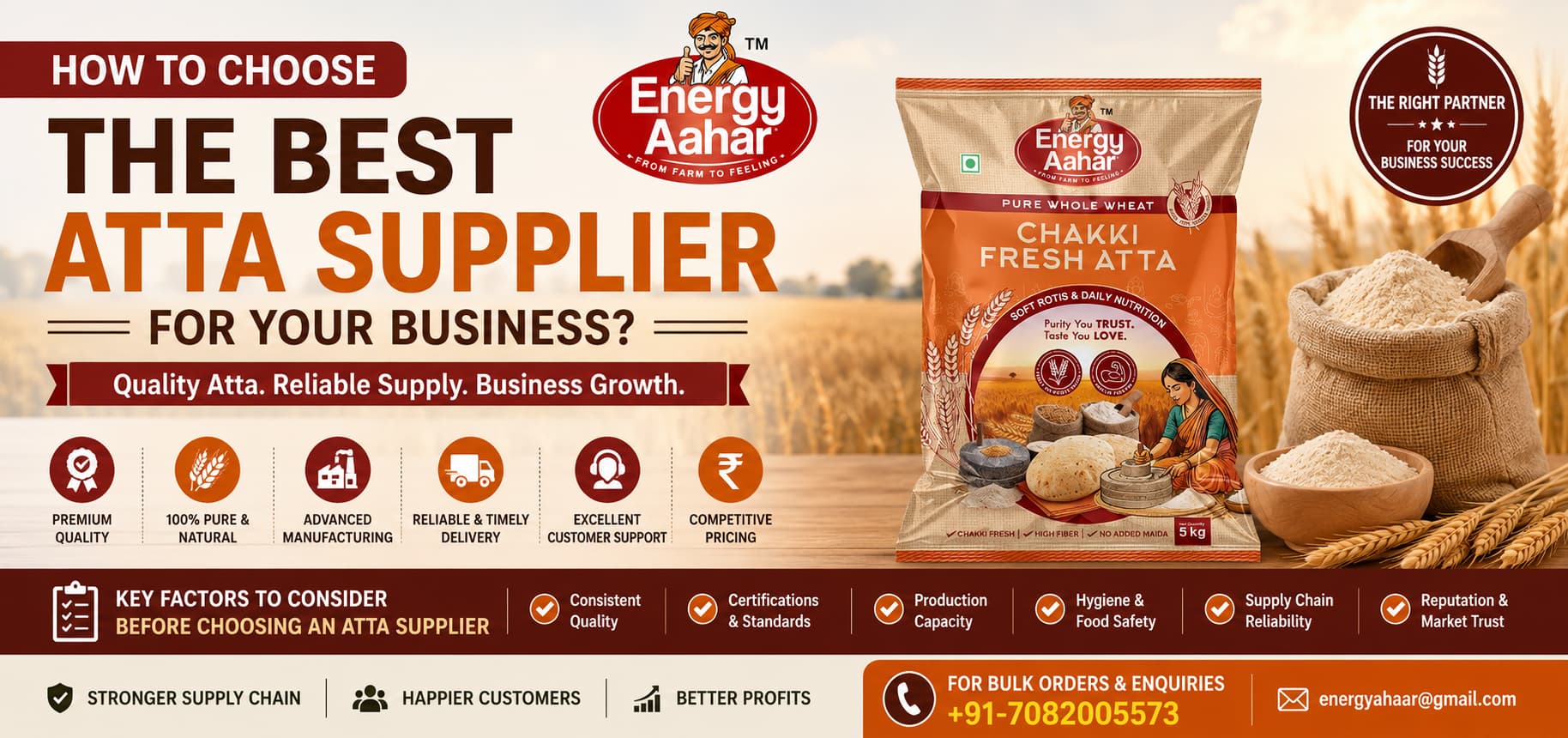
How to Choose the Best Atta Supplier for Your Business
If you run a bakery, cloud kitchen, catering service, or grocery store, choosing the right flour supplier isn't just a purchasing decision; it's a long-term business strategy.
Choosing the wrong food grain supplier in India can lead to quality issues, customer complaints, and financial losses. On the other hand, partnering with the right bulk food supplier in India can make your business more stable and profitable.
Why Is Choosing the Right Flour Supplier So Important?
A trustworthy supplier ensures:
On-time delivery
Stable pricing
Hygienic processing
Consistent flour quality
If the supplier is unreliable, the consequences can add up quickly:
Customers complain
Your brand image takes a hit
The taste and texture of your final product changes
Smart businesses always work with trusted wheat suppliers in India because consistency builds customer loyalty.
Important Factors to Consider When Choosing a Flour Supplier
1. Quality Comes First
Quality is non-negotiable. If you overlook it, your business won't survive in a competitive market.
Things to check:
How fresh is the flour?
Does it have a natural, clean smell?
How fine or soft is the texture?
Types of flour to consider:
Multigrain flour
Organic flour
Cracked wheat flour
A reputable food grain supplier in India will always guarantee high-quality output.
2. Experience and Reputation of the Supplier
Experience makes a supplier more dependable and easier to trust with long-term contracts.
Consider:
Years of experience in the market
Businesses they've served in the past
Online reviews and testimonials
It's best to choose a well-established supplier of wholesale grain in Delhi to ensure reliable, professional service.
3. Price and Bulk Purchase Discounts
Every business needs healthy margins to survive.
Keep in mind:
Compare prices across multiple suppliers
Watch for hidden or extra charges
Ask about bulk purchase discounts (per ton or quintal)
The best bulk food suppliers in India offer both quality and competitive pricing.
4. Consistent Supply
Your stock should never run out — especially during peak demand.
This means your supplier should:
Have the capacity to fulfill large orders
Maintain backup stock
Handle seasonal demand spikes without delays
5. Delivery and Logistics
Late deliveries can mean lost business and unhappy customers.
Ask yourself:
Is their delivery system efficient and up to date?
Do they operate in your area?
Are delivery timelines predictable?
If you're based in the NCR region, sourcing from wholesalers of wheat in Delhi can significantly reduce delivery time.
6. Packaging and Hygiene
The hygiene of your flour largely depends on how it's packaged.
Look for:
Food-grade packaging materials
Moisture-proof packing
Clear, proper labeling
Good wheat suppliers in India take packaging and hygiene seriously.
7. Certification (Non-Negotiable)
Safety and compliance are critical in the food industry. Always confirm:
FSSAI license
ISO certification
AGMARK approval
Only work with a certified, approved supplier of food grains in India.
8. Customization Options
Every business has unique requirements. Ask your supplier:
Can they adjust grind sizes on request?
Do they offer private labeling?
Can they supply specialty wheat varieties?
A flexible bulk food supplier in India will be able to meet your specific business needs.
9. Customer Support
Clear, responsive communication matters just as much as product quality.
Evaluate:
Response time
Order follow-up process
Speed of problem resolution
The best wholesale grain providers in Delhi are known for being prompt and easy to reach.
10. Always Start with a Trial Order
Never place a large order right away. Instead:
Order a small quantity first
Check the quality thoroughly
Gather feedback from your team
This simple step helps confirm whether a wheat supplier in India is the right long-term fit for your business.
Why Do Companies Need to Purchase Flour in Bulk?
Buying in bulk isn't just cost-effective it's a smarter way to manage your entire supply chain.
Key advantages include:
Maintains stock continuity
Reduces overall costs
Eliminates last-minute purchasing
Strengthens your supply chain
Many businesses partner with food wholesalers in India or food B2B suppliers in India to unlock these benefits.
How Does Buying in Bulk Reduce Costs?
1. Lower Cost Per Kilogram Bulk orders are typically priced lower per kilogram compared to retail purchases.
2. Lower Logistics Costs Fewer, larger deliveries mean lower overall transportation expenses.
3. Supplier-Specific Benefits Bulk buyers often receive exclusive deals and priority service from suppliers.
Partnering with a wholesale grain supplier in Delhi can help you unlock these better pricing tiers.
Challenges in Bulk Atta Purchases (and How to Solve Them)
1. Need for Proper Storage Space Flour is highly sensitive to moisture, so storage is a major concern with bulk buying.
Solution: Store flour in a dry, hygienic space using airtight containers.
2. Large Upfront Capital Bulk purchases require significant capital upfront, which can be challenging for smaller businesses.
Solution: Start with smaller bulk quantities and scale up gradually as demand stabilizes.
3. Single-Source Risk Relying on just one supplier can leave your business vulnerable to supply disruptions.
Solution: Maintain relationships with 2–3 alternative suppliers for the same product.
Always work with a trustworthy food grain supplier in India to minimize these risks.
Recent Trends in Bulk Flour Supply
Rising demand from:
Restaurants
Hotels
Cloud kitchens
The growing food industry continues to drive up demand for flour across India.
Expanding supply networks:
Bulk food distributors in India
Wholesale grocery suppliers in India
More businesses are shifting toward organized supply networks instead of relying on small, local suppliers, helping ensure more consistent, on-time delivery.
India's B2B food supply ecosystem is expanding rapidly, and smart bulk procurement paired with a reliable supply chain has become essential for business growth.
FAQs
Q1: How do you select the best flour supplier?
Consider quality, pricing, delivery reliability, and certifications and always start with a trial order to evaluate real-world performance.
Q2: Does bulk purchasing of flour improve profitability?
Yes. Bulk purchases increase profit margins through lower per-kg costs, reduced shipping expenses, and additional supplier discounts.
Q3: Should you work with multiple suppliers?
Absolutely. Partnering with several food grain suppliers in India helps diversify risk. If one supplier faces a disruption, another can step in to keep your operations running smoothly.
Q4: Can suppliers offer private labeling services?
Yes. Many bulk food suppliers in India offer private labeling, allowing you to package products under your own brand — helping build customer trust and brand recognition.
Q5: How much does wholesale flour cost in India?
Wholesale flour prices in India typically range from ₹30–₹40 per kg, depending on quality, wheat variety, and location. Larger order volumes usually secure better pricing.
Conclusion
The ideal atta supplier consistently delivers quality, competitive pricing, timely deliveries, and strong customer service. Partnering with the right wheat supplier in India or wholesale grain supplier in Delhi ensures product consistency, helps control costs, and strengthens service delivery to your customers all of which are essential for sustainable business growth.