
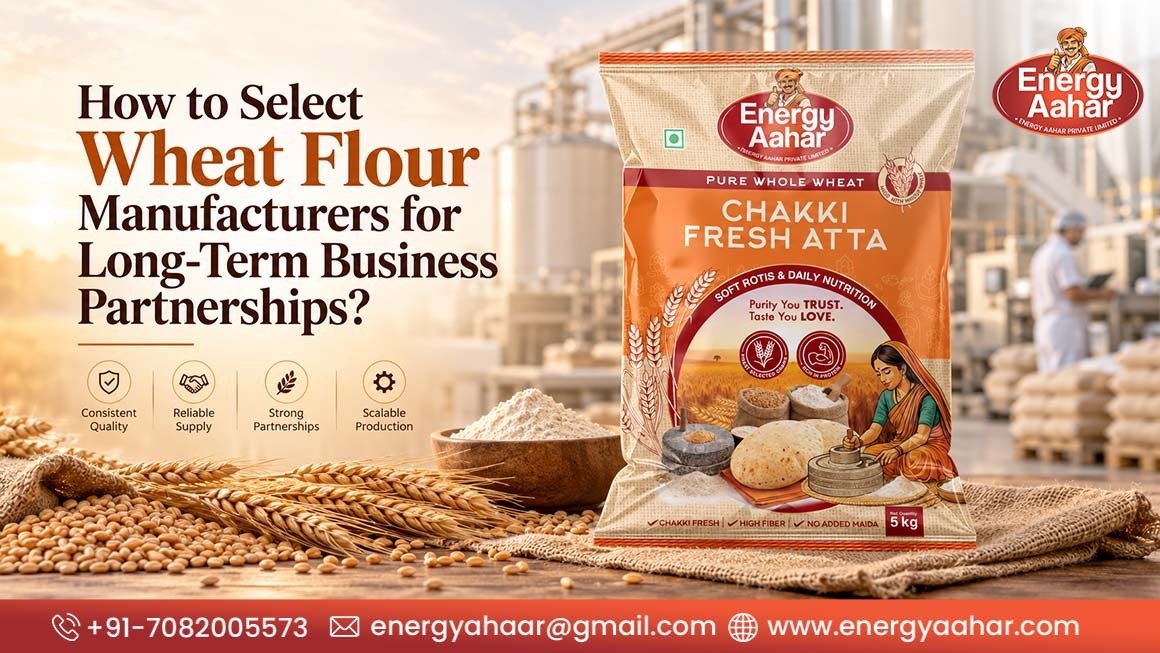
Whether your business is an industrial bakery, a QSR chain or a large scale retail distribution network, the quality of your raw ingredients is critical component of final product. By collaborating with a leading wheat flour manufacturers, companies can ensure the uniform texture of the product, streamlined operations and the sustainable growth. This detailed guide will cover the essential quality standards, technological features, supply chain procedures and financial considerations that you must consider before entering into the long term supply contract.
What Technical Metrics Define Wheat Flour Consistency?
Consistency is a must when it comes to commercial buyers. A slight difference in the amount of water absorbed or ash content can cause automated production lines to become disrupted and batch yields to be lost. The best manufacturing facilities have advanced lab testing to ensure the consistency of each batch.
- Protein & Gluten Strength: This relates to the elasticity of the dough, its ability to hold gas and the strength of the structure during mixing and baking
- Ash Content & Whiteness: Lower ash content means less bran contamination in the milling, resulting in clean color and optimum flour brightness
- Granulation & Particle Size: Uniform particle size for predictable water absorption rates and smooth dough handling
- Moisture Levels: Controlled moisture levels in flour will help to prevent clumping during storage and will inhibit pest or mold growth
Why is it important to inspect Processing Technology and Infrastructure?
Modern milling combines the selection of the grains with precision engineering. In fact, expert wheat flour producers use high-capacity, automated milling machinery like modern roller mills or chilled traditional chakki mills that mill wheat without damaging the natural nutrients or heat-sensitive oils.
If you're visiting or considering a processing plant, make sure they have a total metric ton per day capacity you can easily accommodate, as this will allow them to process your surge in volume without causing any lead time delays. Automated cleaning and destoning systems, optical sorting equipment and touch free packaging systems all ensure the consistent quality and purity in production of flour, meeting today's stringent food safety standards.
How Quality Certifications and Sourcing Transparency Safeguard Your Brand?
A long-term vendor should be a shield to your brand reputation. Seek partners who are using certified food safety management systems like FSSAI licenses, ISO 22000 and FSSC certifications. These certifications validate the implementation of rigorous micro-biological testing, heavy-metal testing and pest control management.
It is also essential to ensure transparency of grain sourcing. Manufacturers who purchase high quality wheat from known agricultural regions are able to track the source of the wheat and ensure that it is of the highest quality in terms of moisture content and raw grain purity from the very moment it is harvested.
Can the Manufacturer Adapt to Dynamic Commercial Supply Demands?
Agility is essential to a good strategic partnership. As your market expands, your ingredient needs will change both in terms of quantity and customization. Good wheat flour manufacturers can provide custom formulations to meet the needs of various end-products, from high-gluten flour for artisanal breads to specialized flour for steamed buns, fried snacks or whole-wheat rotis.
Look at their packaging and private labelling options in addition to the product formulation. The partners who provide moisture-proof multi-ply packaging for food products from 5kg to 50kg provide you with the flexibility to control your internal kitchen inventory or distribute branded consumer retail packs easily.
Conclusion
Choosing the right partner is a combination of technical and operational scale, along with food safety standards. Through technical specification vetting, visits to processing plants, and communication protocols, food companies can ensure they have a consistent supply chain that helps protect them from market fluctuations and product variations. If you're looking for a reliable Wheat Flour Manufacturers that can provide you with processing power, cutting-edge hygienic facilities and a commitment to quality that you can trust, then Energy Aahar is the one for you.
FAQs
Why is flour consistency important for businesses?
Uniform texture, quality and predictable production results are obtained with the consistent flour.
How does moisture content affect the storage of flour?
Moisture control will keep food fresh and free from spoilage while in storage.
Do quality checks need to be done prior to bulk flour purchases?
Yes, quality checks do ensure the specifications are met and reduce production risks.
How can the shelf life of wheat flour be determined?
Protective packaging can be used to maintain the quality of flour and avoid contact with moisture.