Poha Nutrition Facts: Why Quality Matters for Health-Focused Brands
Poha (flattened rice) has become a go-to ingredient for health-conscious consumers and the brands serving them — from ready-to-eat startups to fitness-focused meal brands. But not all poha delivers the same nutritional value. Processing quality, grain sourcing, and handling directly affect the nutrition your end product actually offers.
This guide breaks down poha nutrition facts, why they matter, and what health-focused brands should look for when sourcing poha in bulk.
What Are the Basic Nutrition Facts of Poha?
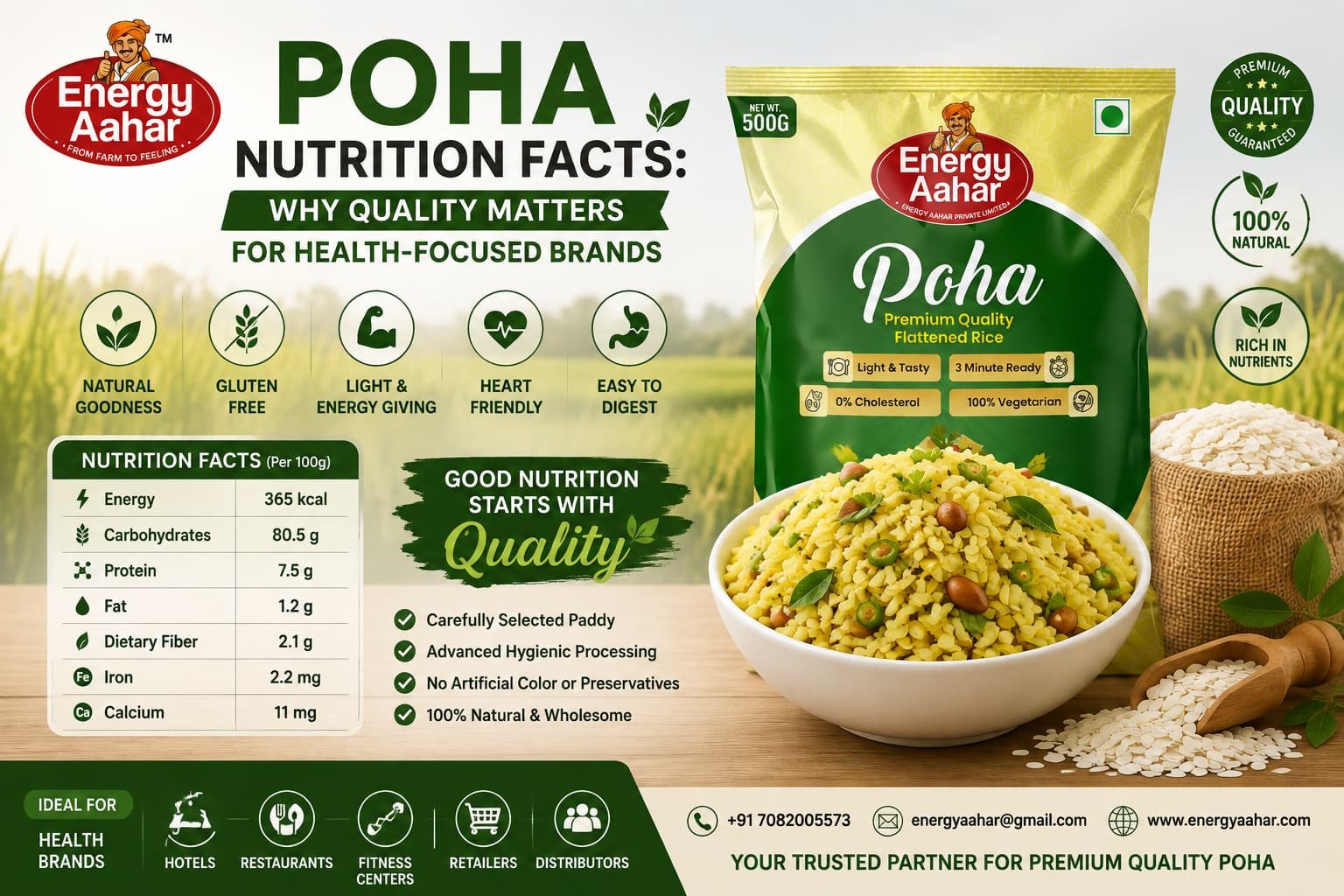
Poha is made from parboiled rice that is flattened into flakes, which changes its nutrient profile slightly compared to regular rice. Per 100 grams of raw (dry) poha, general nutritional values typically include:
- Calories: Approximately 350–370 kcal
- Carbohydrates: Around 76–78 g
- Protein: Around 6–7 g
- Fat: Around 1–1.5 g (very low, especially before cooking with oil)
- Fiber: Around 1–2 g
- Iron: Poha retains some iron from the parboiling process, and many commercial brands fortify it further
Exact values vary by manufacturer, processing method, and whether the poha is fortified — which is exactly why sourcing quality matters.
Why Is Poha Considered a Healthy Food Choice?
Poha offers several practical nutritional advantages that make it popular with health-focused consumers:
- Naturally low in fat — especially in its dry, unprepared form
- Gluten-free — since it's made from rice, it fits gluten-free diets
- Easily digestible — the parboiling and flattening process makes it gentle on digestion
- Light yet filling — a good source of quick carbohydrate energy without heaviness
- Versatile for fortification — commonly fortified with iron and folic acid in many commercial and government nutrition programs
Does Poha Help with Weight Management?
Poha can fit into a weight-conscious diet when prepared with minimal oil and paired with vegetables, sprouts, or protein sources like peanuts. Because it's light and low in fat before cooking, it's often used as a breakfast option by people watching calorie intake — though the final nutritional value depends heavily on how it's prepared, not just the raw poha itself.
Why Does Processing Quality Affect Poha's Nutritional Value?
The nutrition your customers actually get depends heavily on how the poha is processed, not just its raw composition:
- Proper parboiling retains more nutrients compared to poorly controlled processing
- Clean, contamination-free processing ensures the product is safe and consistent
- Correct moisture control prevents nutrient degradation during storage
- Fortification accuracy — if a brand claims fortified poha (added iron, folic acid), the manufacturer needs precise, verifiable fortification levels
For health-focused brands, this means the manufacturer you choose directly affects whether your nutrition label claims are accurate and consistent batch after batch.
What Should Health-Focused Brands Look for in a Poha Supplier?
If you're building a health-positioned product — a ready-to-eat brand, a fitness meal kit, or a fortified staple — your poha source needs to support that positioning with real quality, not just marketing claims. Look for:
- FSSAI certification and documented food safety compliance
- Lab-tested nutritional data the manufacturer can share and verify
- Consistent grain quality across every production batch
- Hygienic, modern processing facilities with proper moisture and contamination control
- Fortification transparency if you're marketing added nutrients
How Does Quality Sourcing Impact Your Brand's Credibility?
Health-focused consumers increasingly check labels and question sourcing. If your nutrition claims don't match lab-verified reality, or if quality is inconsistent between batches, it damages trust fast — especially in a market where reviews and social proof spread quickly. Partnering with a certified, quality-focused manufacturer protects your brand's credibility as much as it protects your product.
Frequently Asked Questions
Is poha good for daily consumption?
Yes, poha can be part of a regular healthy diet when prepared with vegetables and minimal oil, since it's light, low in fat, and easy to digest. As with any staple food, balance and portion control matter.
Is poha suitable for a gluten-free diet?
Yes. Poha is made from rice, which is naturally gluten-free, making it a suitable option for people avoiding gluten — though cross-contamination risk should be checked if strict gluten-free certification is required.
How many calories are in a typical serving of cooked poha?
A typical serving (around 150g cooked) generally falls between 250–300 kcal, though this varies significantly based on the amount of oil, peanuts, and other ingredients added during preparation.
Why does the source of poha matter for a health food brand?
Because nutrition and safety claims on your packaging need to reflect the actual product. A quality, certified manufacturer ensures consistent nutrition, proper fortification (if claimed), and food safety compliance that protects your brand's credibility.
Can poha be fortified with additional nutrients?
Yes. Many manufacturers offer fortified poha with added iron and folic acid, which is common in both commercial health-focused products and government nutrition programs. Brands should request verified fortification data from their supplier.
Why Choose Energy Aahar for Quality Poha Sourcing?
Energy Aahar is a professionally run food processing company based in Rohtak Food Park, Haryana, continuing the legacy of Gold Grain since 2009. With a high-capacity, automated, FSSAI certified processing facility, Energy Aahar supplies consistent, quality-controlled poha to health-focused brands, hotels, restaurants, and private label businesses across India.
Partnering with Energy Aahar means:
- FSSAI certified, hygienically processed poha with consistent quality
- Transparent sourcing and documentation to support your nutrition and quality claims
- Private label and OEM manufacturing for health-focused and staple food brands
- Reliable bulk supply backed by company-owned logistics across North India
Conclusion
Poha's nutritional value on paper is only as reliable as the process behind it. For health-focused brands, sourcing from a certified, quality-controlled manufacturer isn't optional — it's what keeps your nutrition claims accurate and your customers' trust intact. Energy Aahar combines certified processing with the consistency and transparency health-focused brands need to scale responsibly.
Get in touch with Energy Aahar: 📞 +91-7082005573 ✉️ energyahaar@gmail.com 🌐 www.energyaahar.com 📍 Rohtak Food Park, Haryana, India
Reach out today to discuss quality-controlled poha sourcing for your health-focused or private label brand.