
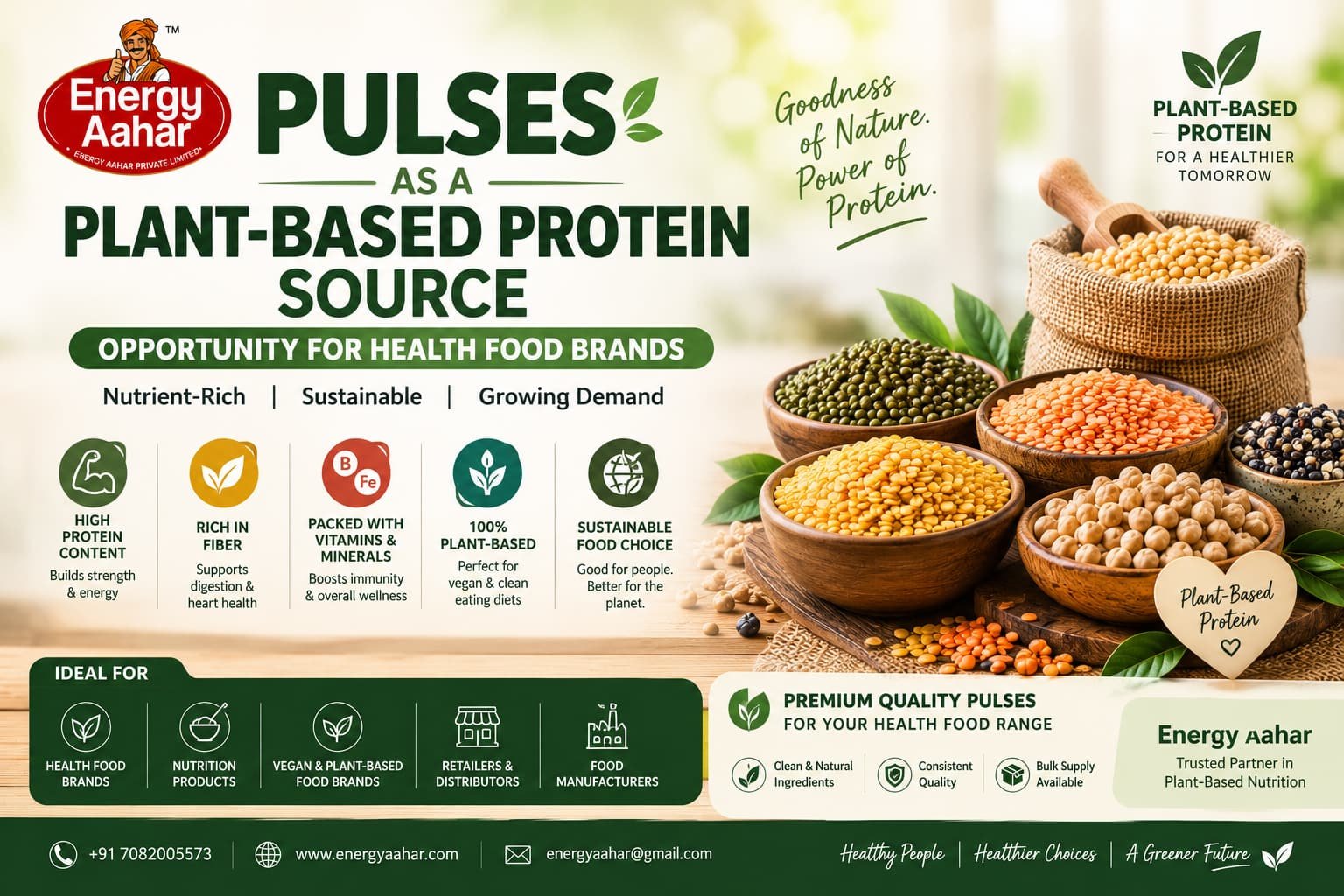
Pulses as a Plant-Based Protein Source: Opportunity for Health Food Brands
Soy and pea protein dominate the plant-based protein conversation in India, but there's a category already sitting in almost every Indian kitchen that's quietly positioned to be the next big plant-protein opportunity: pulses. For health food brands looking to launch protein-forward products without importing exotic ingredients or building consumer education from zero, pulses offer something rare: genuine nutritional credibility combined with instant consumer trust.
Here's why pulses are emerging as a serious plant-based protein opportunity and what it means for brands sourcing them at scale.
The Plant-Based Protein Market Is Growing Fast in India
India's plant-based protein market was valued at roughly $634 million in 2025 and is projected to grow at a CAGR of around 14.36% through 2034, according to IMARC Group. That growth is being driven by rising health consciousness, a well-established vegetarian food culture, and increasing consumer concern around sustainable, clean-label nutrition. Unlike Western markets, where plant-based protein often means convincing consumers to adopt a new category, India already has one of the largest vegetarian populations in the world meaning the demand infrastructure already exists.
At the same time, government policy is actively reinforcing pulses as a strategic protein source: initiatives like the Mission for Aatmanirbharta in Pulses represent a multi-thousand-crore push toward strengthening domestic pulses supply and processing, signaling that pulses are viewed as core national nutrition infrastructure, not a niche health-food ingredient.
Why Pulses Specifically Are a Strong Fit for Health Food Brands
1. Genuinely High Protein Content
Pulses including chana, moong, masoor, toor, and urad typically contain 20–25% protein by weight, making them one of the most protein-dense plant foods available without processing into an isolate or concentrate. This lets brands market "high protein" claims using a whole-food ingredient rather than a heavily processed protein powder.
2. Zero Consumer Education Required
Soy protein isolate and pea protein isolate are still unfamiliar to a large share of Indian consumers. Pulses are not. Dal, chana, and besan are already part of daily diets across the country a health food brand built around pulses doesn't need to convince consumers the ingredient is safe or familiar, only that the format (bar, mix, snack, flour) is worth trying.
3. Whole-Food, Clean-Label Positioning
As "clean label" becomes a bigger purchase driver, pulses fit naturally they don't require the industrial extraction processes that isolates do, letting brands market products as minimally processed rather than engineered.
4. Format Versatility
Pulses can be sold or formulated as whole grains, split dal, besan (gram flour), pulse-based flour blends, and roasted snacks giving health food brands multiple product formats from a single ingredient category, unlike single-format proteins like whey or soy isolate.
5. Sustainability Alignment
Pulses are nitrogen-fixing crops that require less water than many animal protein sources, which increasingly matters to environmentally conscious consumers evaluating both plant-based protein products and interested in a lower-footprint diet.
What This Means for Health Food Brands Building Around Pulses
What to Look for When Sourcing Pulses in Bulk for a Health Food Product
Building a credible high-protein product line requires ingredient consistency that a retail-grade pulses supplier often can't guarantee. Before finalizing a bulk pulses supplier, health food brands should check:
FSSAI licensing and food safety certification — such as FSSC 22000:2018, required for most modern retail and export buyer audits.
Sortex-grade cleaning and grading — ensures uniform size, color, and density, which matters for both product consistency and consumer-facing quality perception.
In-house lab testing for microbiological and chemical safety before packaging.
Bulk packaging options suited to production-scale ordering, not just retail packs.
Private labelling capability, for brands that want a branded pulses or pulse-flour product without operating their own processing facility.
Manufacturing capacity and delivery reliability, to support recurring production schedules as the brand scales.
How Energy Aahar Supports This Opportunity
Energy Aahar supplies pulses as part of its wheat and grain-based product range, manufactured under the same certified quality system used across its full product line:
FSSAI license (10019064001786), FSSC 22000:2018 certification, and ISO 9001 / ISO 14001 certified management systems
Sortex-grade cleaning and grading for uniform size, color, and purity
In-house laboratory testing for chemical and microbiological safety before packaging
Manufacturing scale supported by operations at Rohtak Food Park, Haryana, built for institutional and bulk supply
Private labelling options for health food brands building a pulse-protein product line
A company-owned delivery fleet across North India for predictable bulk restocking
Frequently Asked Questions
Why are pulses considered a good plant-based protein source?
Pulses such as chana, moong, masoor, toor, and urad typically contain 20–25% protein by weight, offering a naturally protein-dense, whole-food option without the processing required to produce isolates or concentrates.
How is the plant-based protein market growing in India?
India's plant-based protein market was valued at approximately $634 million in 2025 and is projected to grow at around 14.36% CAGR through 2034, driven by rising health consciousness and India's large vegetarian consumer base.
What advantage do pulses have over soy or pea protein isolates for Indian health food brands?
Pulses are already a familiar, trusted part of Indian diets, meaning brands don't need to educate consumers on the ingredient itself only on the new product format, unlike isolates such as soy or pea protein, which are still relatively unfamiliar to many Indian consumers.
What should a health food brand check before sourcing pulses in bulk?
Brands should verify the supplier's FSSAI license, food safety certifications like FSSC 22000, sortex-grade cleaning process, in-house testing practices, and capacity to support recurring bulk orders and private labelling.
Can pulses be private labelled for a health food brand?
Yes, manufacturers offering private labelling and co-packing services can supply pulses or pulse-based flour under a brand's own name, provided order volumes meet the manufacturer's minimum requirements.
Final Takeaway
While the plant-based protein conversation in India often centers on soy and pea isolates, pulses represent a lower-friction, higher-trust opportunity for health food brands a genuinely protein-dense, whole-food ingredient that consumers already know and trust, backed by a market and policy environment actively growing in its favor. For brands evaluating where to build their next high-protein product line, the question isn't whether pulses qualify as a serious plant-protein source it's which certified, bulk-capable supplier can support that growth.