
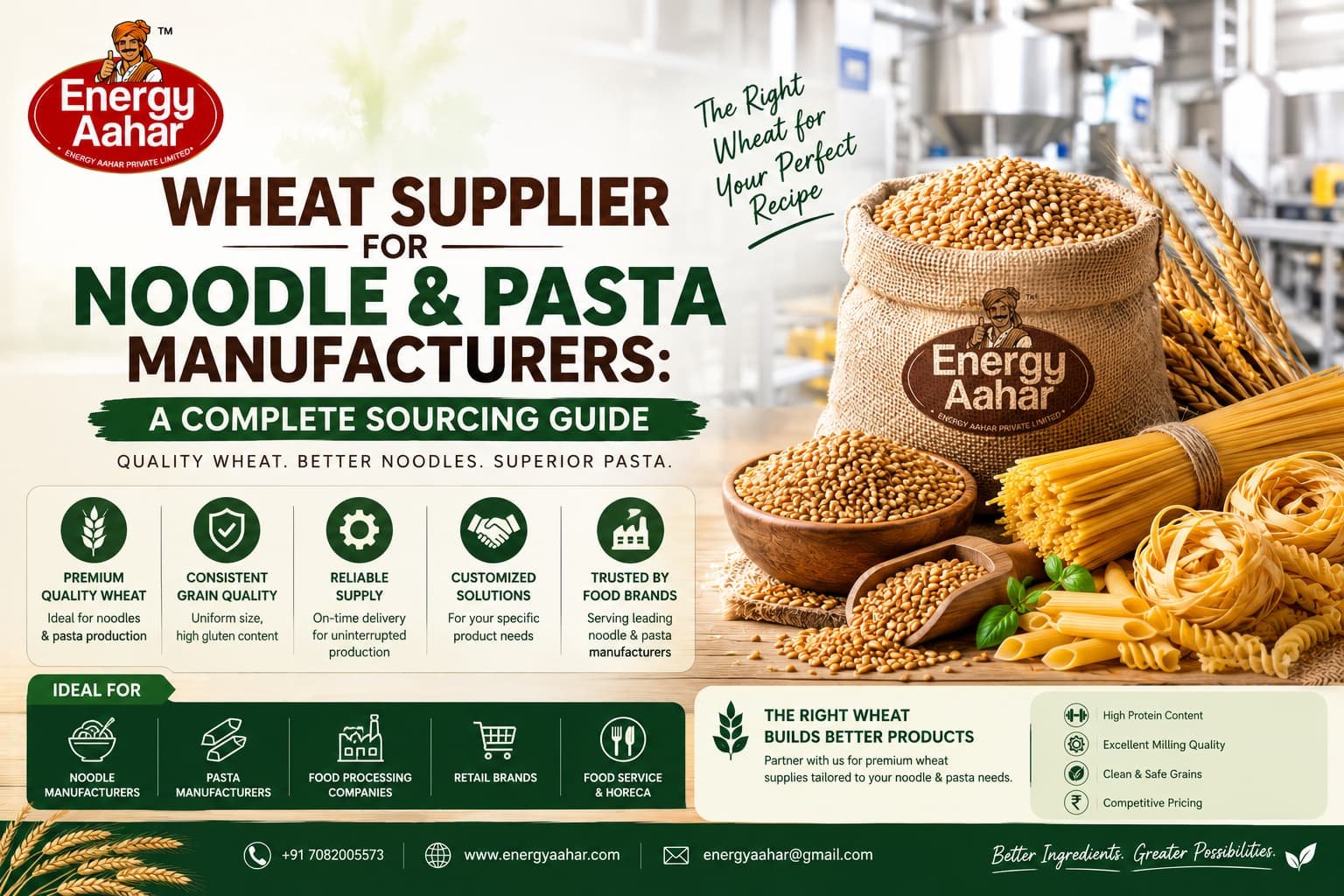
Wheat Supplier for Noodle & Pasta Manufacturers: A Complete Sourcing Guide
Noodle and pasta manufacturing depends on one thing above all else: the quality and consistency of the wheat going into it. The wrong grain specification can mean weak dough strength, poor texture, or inconsistent cooking results problems that show up in the final product and, eventually, in customer complaints. Choosing the right wheat supplier for noodle and pasta manufacturers is one of the most important sourcing decisions a food production business makes.
Here's what to look for, which wheat types matter most, and how to evaluate a supplier before committing to bulk orders.
Why Does Wheat Quality Matter So Much for Noodles and Pasta?
Noodle and pasta production relies on specific dough properties: elasticity, firmness, and the ability to hold shape during cooking (often called "bite" or texture). These properties come directly from the protein content and gluten strength of the wheat used. Inconsistent wheat quality between batches can lead to:
Dough that's too soft or too brittle to process on manufacturing lines
Noodles/pasta that break apart during cooking
Inconsistent color and texture across production runs
Higher wastage and rework on the factory floor
This is why manufacturers can't treat wheat sourcing as a commodity purchase; it needs to be treated as a quality-critical input.
What Type of Wheat Is Best for Noodle and Pasta Production?
Durum Wheat (Best for Pasta)
Durum wheat has a high protein content and strong gluten structure, making it the preferred choice for traditional pasta production. It produces semolina with the firmness needed for pasta shapes to hold up during cooking.
Hard Wheat / High-Protein Common Wheat (Best for Noodles)
Many noodle types — especially Asian-style wheat noodles use hard wheat varieties with medium-to-high protein content, which gives the dough enough elasticity to be rolled, cut, and cooked without falling apart.
Soft Wheat (Generally Avoided)
Soft wheat, lower in protein and gluten strength, is typically unsuitable for pasta and most noodle types since it lacks the structural strength needed for shaping and cooking.
What Should You Check When Choosing a Wheat Supplier for Noodle/Pasta Manufacturing?
1. Protein Content Specifications
Ask suppliers for documented protein percentage ranges. Pasta production typically needs wheat/semolina in the 11-14% protein range, depending on the product type.
2. Gluten Strength and Quality
Beyond protein percentage, gluten quality (strength and elasticity) affects dough performance. Reliable suppliers should be able to share test data, not just percentages.
3. Consistency Across Batches
One good batch doesn't make a good supplier. Ask about their quality control process and whether every batch is tested before dispatch — consistency matters more than a single high-quality sample.
4. Moisture Content
Wheat with excess moisture is prone to spoilage and can affect milling and dough performance. Suppliers should maintain moisture levels within industry-standard limits.
5. Cleaning and Impurity Levels
Stone-free, dust-free, properly cleaned wheat reduces processing issues on your production line and protects your equipment.
6. Bulk Supply Capacity and Reliability
Noodle and pasta manufacturers running continuous production lines need a supplier who can guarantee consistent volume without supply gaps — check processing capacity (tonnes per day) and delivery track record.
7. Certifications
FSSAI registration is essential; ISO certification adds an extra layer of assurance for quality management systems.
How Do You Evaluate a Wheat Supplier Before Bulk Ordering?
Request a sample batch and run it through a trial production cycle before committing
Ask for lab test reports on protein content and gluten strength
Check certifications (FSSAI, ISO) and request copies
Ask about batch-to-batch testing and quality control documentation
Confirm minimum order quantities, lead times, and logistics capabilities
Talk to existing clients in food manufacturing, if references are available
Why Choose Energy Aahar as Your Wheat Supplier?
Energy Aahar operates a modern, automated wheat processing facility at Rohtak Food Park, Haryana, continuing the legacy of Gold Grain since 2009. The facility processes wheat sourced from Haryana's wheat belt, with automated cleaning, grading, and quality checks built into the process.
For noodle and pasta manufacturers, Energy Aahar offers:
Wheat sourced and graded for protein and quality consistency
Automated, hygienic processing that reduces impurities and contamination risk
Reliable bulk supply capacity with company-owned logistics across North India
FSSAI certified processing standards
Direct manufacturer-to-manufacturer supply, without middlemen adding delays or cost
Frequently Asked Questions
What protein content is ideal for wheat used in pasta manufacturing?
Pasta production typically requires wheat or semolina with a protein content in the range of 11-14%, depending on the pasta type and desired texture. Durum wheat is generally preferred for its higher protein and gluten strength.
Can the same wheat be used for both noodles and pasta?
Not always. While some overlap exists, pasta production generally favors durum wheat for its firmness, while many noodle types use hard wheat varieties suited to a more elastic dough. It's best to confirm exact specifications with your supplier based on your product formulation.
How do I verify a wheat supplier's protein content claims?
Request lab test reports or certificates of analysis for each batch. Reliable suppliers should provide documented protein and gluten test results rather than just verbal assurances.
What's the minimum order quantity for bulk wheat supply to a manufacturing facility?
This varies by supplier and depends on your production scale, ranging from a few tonnes for smaller manufacturers to much larger recurring bulk orders for large-scale facilities. Confirm MOQ directly with your chosen supplier.
Does wheat quality affect the shelf life of noodles and pasta?
Yes. Proper moisture content and clean, well-processed wheat reduce the risk of spoilage and contamination, which directly supports a longer, more stable shelf life for the finished product.
Conclusion
For noodle and pasta manufacturers, wheat sourcing isn't just a procurement task — it's a quality control decision that affects everything downstream, from production efficiency to the final product on store shelves. Protein content, gluten strength, consistency, and reliable bulk supply should guide every sourcing decision. Energy Aahar combines certified, hygienic processing with dependable bulk capacity to support food manufacturers who can't afford inconsistent raw material.
Get in touch with Energy Aahar: 📞 +91-7082005573 ✉️ energyahaar@gmail.com 🌐 www.energyaahar.com 📍 Rohtak Food Park, Haryana, India