
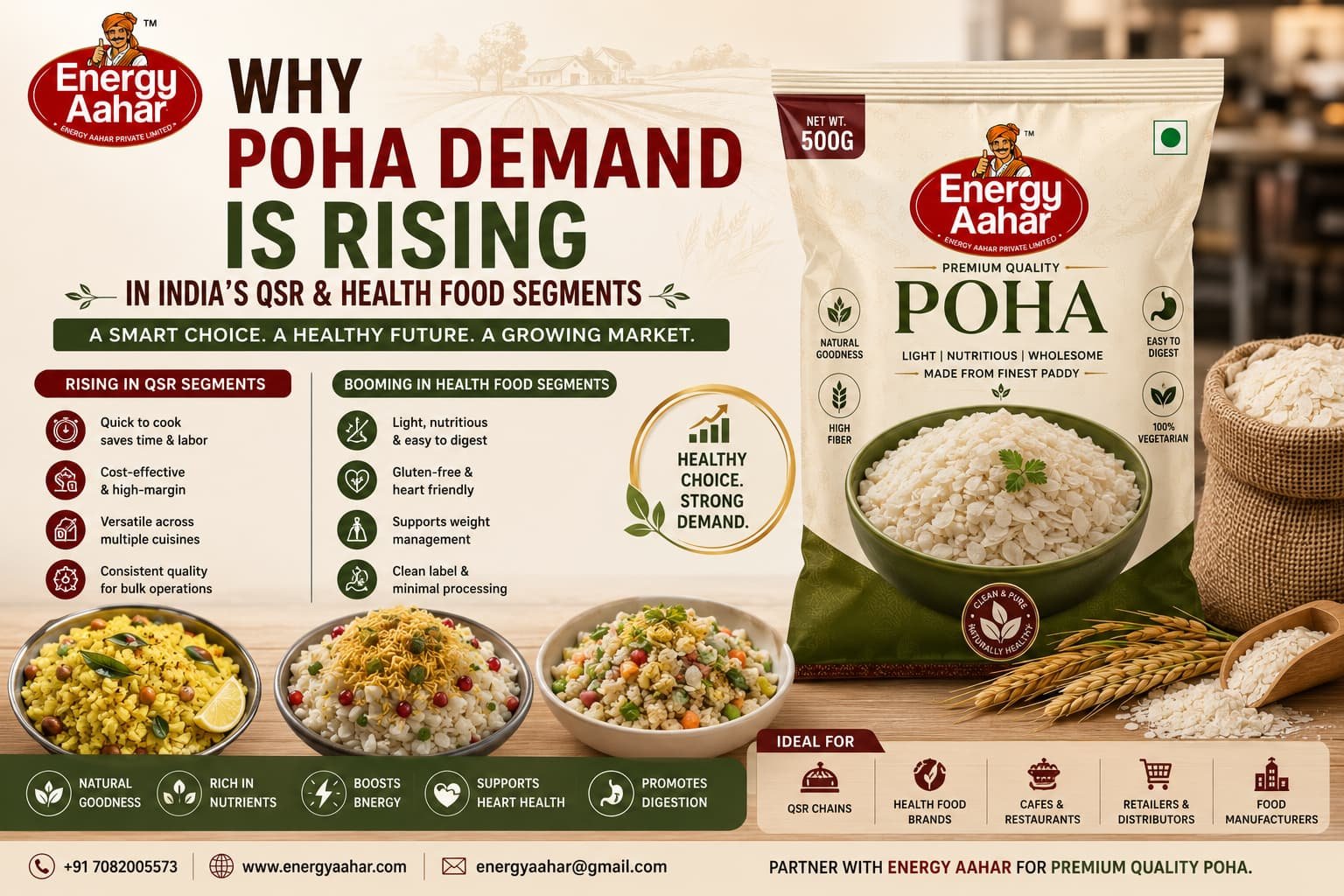
Why Poha Demand Is Rising in India's QSR & Health Food Segments
Poha, flattened rice, traditionally eaten as a light breakfast across Western and Central India is showing up in places it rarely did a decade ago: quick-service restaurant (QSR) menus, health-food startup packaging, and hotel breakfast buffets nationwide. This isn't a coincidence. It's the result of two fast-growing markets converging on the same product at the same time.
Here's the data behind the shift and what it means if you manufacture, distribute, or menu with poha.
The Two Market Forces Behind Rising Poha Demand
1. India's QSR Sector Is Scaling Fast And Menus Are Shifting Toward Healthier Formats
India's Quick Service Restaurant market was valued at roughly $30.37 billion in 2026 and is projected to grow at around 15% CAGR through 2032. A big part of that growth isn't just more outlets it's menu evolution. Health-focused food is now a defining trend within QSR growth, with brands moving away from being seen as purely "junk food" outlets and adding lighter, traditional, and nutrition-forward options to compete for health-conscious customers. Poha fits that shift precisely: it's traditional, familiar, quick to prepare, and doesn't carry the "unhealthy fast food" perception that fried snacks do.
2. India's Health Food Market Is One of the Fastest-Growing in the World
India's health and wellness food market is expanding at close to 20% CAGR, among the fastest growth rates globally, with the number of health-conscious consumers in India projected to rise sharply through 2026. That growth is pulling ingredients like poha into a new spotlight: it's naturally gluten-free, a source of carbohydrates and iron, and requires no deep frying or heavy processing to prepare all attributes that align directly with what health-food brands are marketing right now.
Why Poha Specifically Is Winning in Both Segments
What Rising Demand Means for Restaurant Chains and Health Brands
If you run a QSR chain, hotel F&B program, or packaged health-food brand, rising poha demand isn't just a trend to note; it's a sourcing decision waiting to happen. A few practical implications:
Menu development teams are increasingly testing poha-based breakfast bowls, poha-based savory snacks, and regional poha variations as "better-for-you" menu additions.
Packaged food brands are launching instant or ready-to-cook poha SKUs to capture the same convenience-plus-health positioning that's driving oats and muesli sales.
Bulk buyers now need a poha supplier that can guarantee consistent grain thickness and cleanliness at scale. Inconsistent poha (uneven flake thickness, breakage, or poor cleaning) directly affects cook time and plate consistency, which matters far more at QSR volume than in a home kitchen.
What to Look for in a Poha Manufacturer at Scale
For businesses planning to add or expand poha in their supply chain, sourcing decisions should be evaluated the same way any bulk food ingredient is:
FSSAI licensing and food safety certification (such as FSSC 22000:2018) are non-negotiable for any restaurant chain or packaged brand doing supplier audits.
In-house lab testing for microbiological and chemical safety before packaging.
Consistent flake thickness and cleaning process, since this directly affects cooking time and texture at scale.
Manufacturing capacity large enough to support recurring bulk orders without supply gaps.
Private labelling capability for health-food brands that want to launch a branded poha SKU without building their own manufacturing.
Reliable delivery infrastructure, especially for multi-outlet QSR chains needing predictable weekly restocking.
How Energy Aahar Fits This Demand Shift
Energy Aahar manufactures poha as part of its wheat and grain-based product range at its Rohtak Food Park facility in Haryana, under the same food safety system used across its full product line:
FSSAI license (10019064001786), FSSC 22000:2018 certification, and ISO 9001 / ISO 14001 certified management systems
In-house laboratory testing for chemical and microbiological safety before packaging
Manufacturing scale supported by a 700 TPD flour milling facility, built for consistent bulk and institutional supply
Private labelling options for health-food and QSR brands wanting a branded poha product without operating their own plant
A company-owned delivery fleet across North India for predictable restocking
Frequently Asked Questions
Why is poha demand increasing in India right now?
Poha demand is rising because it sits at the intersection of two fast-growing markets QSR chains adding healthier menu items and the broader health-food market, where poha's gluten-free, low-processing, quick-cook profile matches what health-conscious consumers are actively seeking.
Is poha considered a health food?
Poha is naturally gluten-free and provides carbohydrates, iron, and fiber, and it's typically prepared with minimal oil, which is why it's increasingly marketed as a "better-for-you" breakfast or snack option compared to fried alternatives.
What should a QSR chain or health-food brand check before sourcing poha in bulk? Buyers should verify the manufacturer's FSSAI license, food safety certifications like FSSC 22000, in-house testing practices, flake-thickness consistency, and whether the supplier can support recurring bulk orders and private labelling.
Can poha be private labelled for a restaurant or packaged food brand?
Yes, manufacturers offering private labelling and co-packing services can supply poha under a buyer's own brand, provided the order volume meets the manufacturer's minimum order requirements.
Final Takeaway
Poha's rise across QSR and health-food segments isn't a passing menu trend it's being pulled forward by two of India's fastest-growing food markets at once. For restaurant chains, hotel F&B teams, and health-food brands planning menu or product launches in 2026, the sourcing question isn't whether to consider poha, but which certified, bulk-capable manufacturer can support that growth reliably.